What to Size Up, What to Buy True to Size, and What to Skip
"Buy a size up so they can grow into it" is advice parents hear constantly. But it's not always right. Shoes, bodysuits, and socks need to fit now. Pajamas and outerwear can handle extra room. Here's a practical guide to when sizing up saves money—and when it just means clothes sit unworn.
Sizing in kidswear is a quiet source of frustration for parents. Every brand seems to have its own interpretation of what "2T" or "4 years" means. Some run narrow, others wide. Some shrink in the wash, others stretch out. And layered on top of all that is the well-meaning advice parents hear constantly: "Buy a size up so they can grow into it."
That advice is sometimes smart. Sometimes it's the reason a child spends an entire season in clothes that don't fit. Knowing when to size up, when to buy true to size, and when to skip a piece entirely because the fit just isn't right can save money, reduce waste, and keep a child comfortable in the clothes they're actually wearing right now.
What to Size Up
Some categories genuinely benefit from a little extra room. These are the pieces where growth happens fast, where the item layers over other clothes, or where a slightly oversized fit doesn't interfere with safety or daily function.
Pajamas. Children grow overnight—sometimes literally. Pajamas that are slightly roomy in the body and a little long in the leg are still perfectly functional. A child can sleep comfortably in pajamas that have an inch or two of growing room, and the stretchy ribbed cuffs on many sleep sets keep extra fabric from sliding over feet or hands. Buying one size up in pajamas often extends their useful life by several months.
Outerwear for the next season. A winter coat bought at the start of the cold season should fit well now with room for a layer underneath. But outerwear bought on clearance at the end of the season for next year is a different calculation. Sizing up one size for next year's jacket makes sense, provided the style isn't so oversized that it becomes a safety concern or so bulky that it restricts movement. One size up is reasonable. Two sizes up is a coat that swallows the child whole and won't keep them warm because cold air circulates through all that extra space.
Sweatshirts and hoodies. These are forgiving garments. A slightly roomy sweatshirt looks intentionally cozy rather than ill-fitting, and the extra space allows for layering a T-shirt underneath on colder days. Ribbed cuffs and hem bands help contain the extra fabric so it doesn't hang over hands or ride up during play.
What to Buy True to Size
Other categories need to fit properly right now. These are pieces where fit affects safety, mobility, or basic daily function. Sizing up in these categories creates problems that outweigh any savings from extended wear.
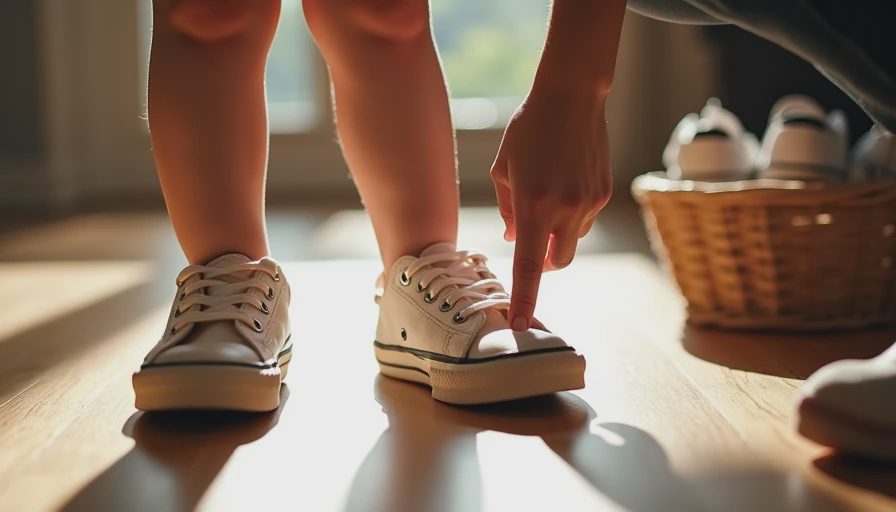
Shoes. This is the non-negotiable category. Shoes that are too big cause tripping, blisters, and altered walking patterns. A child's foot needs the shoe to bend where the foot bends, which requires the shoe to fit correctly. There should be about a thumb's width of space at the toe—enough for growth, but not enough to change how the child walks. Beyond that, true to size is the rule. Buy the size that fits now, and replace when feet grow. It's more expensive in the short term, but it's far better than the alternative.
Bodysuits and onesies. These are worn against the skin and under other clothing. A bodysuit that's too big bunches uncomfortably, creates bulk under pants and tops, and fails at its main job—staying smoothly in place. The envelope necklines on well-designed bodysuits accommodate some growth, but the body and length should fit the child's current size.
Socks and tights. Too-big socks bunch inside shoes and cause blisters. Too-big tights sag at the crotch and slide down throughout the day. Both are inexpensive to replace and should be bought in the size the child currently wears.
What to Skip (or Think Twice About)
Some items are so fit-sensitive that buying them without trying them on first is a gamble. These are the categories worth approaching with extra caution—or skipping entirely if the fit isn't right.
Stiff denim and structured pants. Jeans with no stretch, pants with fixed waistbands and no elastic, trousers with precise tailoring—these are hard to fit on a growing child. They're also the items children tend to find least comfortable. If a pair of structured pants doesn't fit well in the store, it won't fit better at home. Look for pull-on styles with elastic waists instead, or skip structured bottoms until the child is old enough to articulate what feels right.
Formalwear bought far in advance. The flower girl dress bought six months before the wedding. The holiday outfit picked up on clearance in January for next December. Children's growth is unpredictable in both timing and proportion. A dress that theoretically should fit in six months might be too short in the torso, too tight in the arms, or simply the wrong season for the child's actual size when the event arrives. Buy formalwear closer to the event, or buy with a generous return window.
Anything that's "almost right." If a piece doesn't fit comfortably when the child tries it on, don't talk yourself into keeping it. "She'll grow into it" and "it'll be fine after one wash" are phrases that lead to unworn clothes. The piece that fits today gets worn today. The piece that might fit someday usually waits in the drawer until it's outgrown in the other direction.
A Smarter Sizing Mindset
The best sizing strategy isn't about rigid rules. It's about paying attention to how a specific piece will be used. Layer pieces and sleepwear can accommodate some extra room. Shoes and base layers cannot. Structured garments are harder to size up successfully than soft, elasticated ones.
When in doubt, buy for the child in front of you—not the child you imagine they'll be in six months. Growth happens on its own schedule. The clothes that fit today are the ones that will actually get worn.