A One-Week Wardrobe Rotation for Busy Parents
Most parents don't need more kidswear. They need a system for what they already own. A simple one-week rotation—seven outfits, two spares, one laundry day—ends morning standoffs, makes laundry predictable, and answers "what should they wear?" in under ten seconds.
Most parents don't need more kidswear advice telling them to buy more clothes. What they need is a system for using what they already own—one that makes mornings faster, laundry predictable, and the question "what should they wear today?" answerable in under ten seconds.
A one-week rotation is that system. It's not a capsule wardrobe in the minimalist lifestyle sense. It's just a practical sequence: a set number of outfits that cycle through the week in a predictable rhythm, so every morning has a default answer. When the week ends, the laundry runs, and the rotation resets. No guesswork, no last-minute scrambles, no drawers full of clothes nobody wears.
The Foundation: How Many Outfits?
A one-week rotation for a baby, toddler, or preschooler needs seven complete everyday outfits—one per day—plus two spare outfits for the unexpected. That's nine outfits total in the active rotation. Two pairs of pajamas round out the sleep side, washed midweek and weekend.
Seven might sound lean if you're used to an overstuffed dresser, but it's actually generous. Most young children wear the same three or four favorite pieces on repeat regardless of how many options sit in the drawer. A rotation of seven ensures variety without overwhelm, and it fits comfortably in a single laundry load.
How to Build It
Start with what you already have. Pull seven tops and seven bottoms that fit your child right now, are comfortable against their skin, and can handle a full day of real activity. Set aside anything scratchy, stiff, too small, or perpetually avoided. If a piece hasn't been worn in the last two weeks, it probably won't be worn in the next two either.
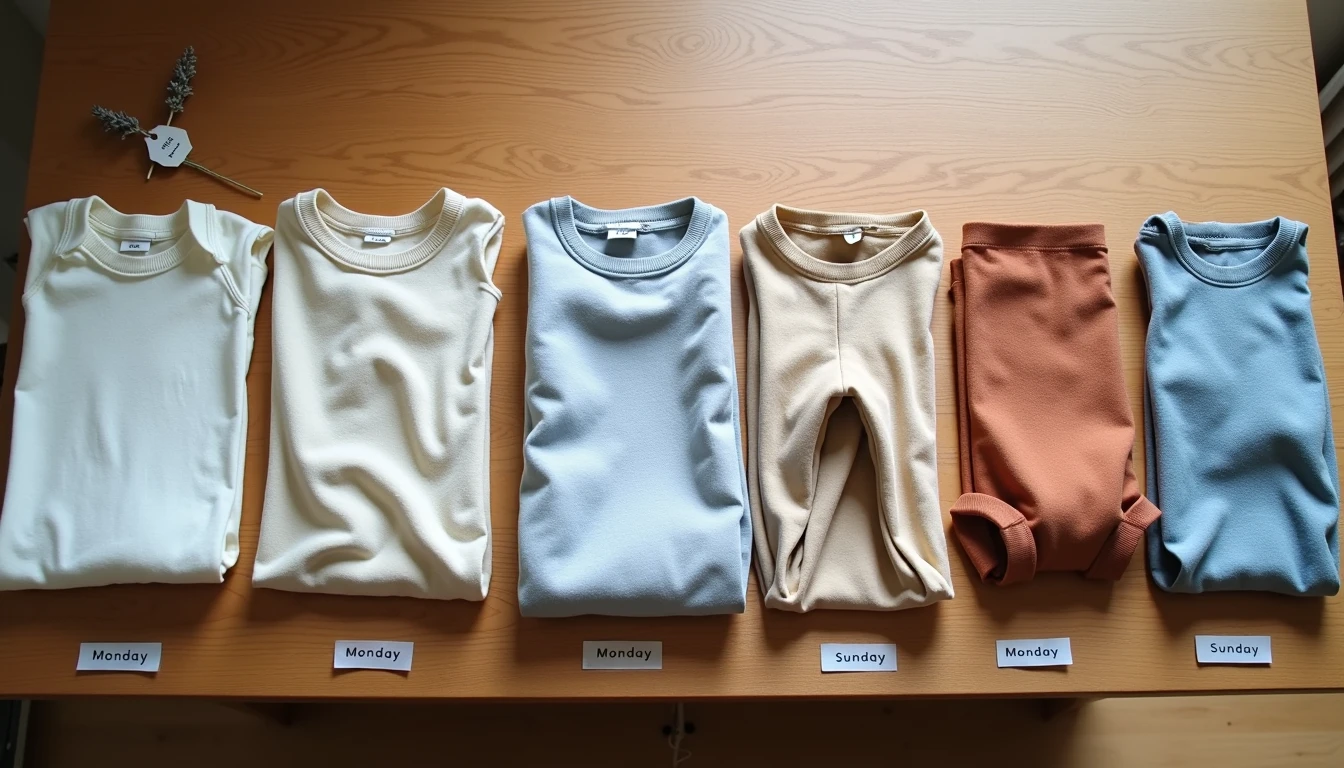
Choose pieces that mix and match naturally. If most tops can pair with most bottoms, the rotation becomes flexible without becoming chaotic. A palette of neutrals with a few gentle colors makes this easy—cream tees, oatmeal joggers, dusty blue leggings, a soft rust sweatshirt. Nothing needs to be beige-on-beige unless that's genuinely your preference. The point is compatibility, not a color scheme.
For each day, assemble one complete outfit: top, bottom, socks, and underwear or bodysuit layer. If your child is old enough to have preferences, involve them in the weekly setup. Let them pick which top goes with which bottom for each day. They get ownership without derailing the morning, because the decisions were already made on Sunday afternoon.
The Weekly Rhythm

Here's how the rotation moves through a real week:
Sunday evening: Assemble seven outfits for the week ahead. Fold each one as a complete set—top, bottom, socks, underwear together—so grabbing a single bundle in the morning is all it takes. Stack them in order, Monday through Sunday, in a drawer or on a shelf.
Monday through Friday: Each morning, grab the day's bundle. Child gets dressed. No decisions, no negotiation beyond "this or that" if you've built in options.
Midweek laundry check: If you have a potty-training toddler or a particularly messy eater, run a quick midweek load for the two spare outfits and any emergency pieces. Otherwise, the seven outfits last until the weekend.
Saturday or Sunday: Laundry day. Wash everything from the rotation, restock the spares, and set up the next week's seven bundles. The rotation resets.
The Two Spare Outfits
The spare outfits live outside the daily rotation but remain easily accessible. They're for the days when a stomach bug hits, a juice cup spills down an entire outfit before 8 a.m., or the weather takes an unexpected turn. If a spare gets used on Tuesday, wash it that evening and return it to the backup spot. If it doesn't get used all week, it rolls into next week's rotation and a fresh spare takes its place.
Two spares is the right number. One spare gets used and you're suddenly without a safety net. Three spares and you're drifting back into overbuying territory. Two covers the realistic range of surprises in a week.
Seasonal Adjustments
The rotation isn't static. As seasons change, swap out fabric weights—short sleeves replace long sleeves, lightweight pants replace fleece-lined ones. The structure of seven daily outfits plus two spares stays the same. The contents shift with the weather.
During transitional weeks, when mornings are cold and afternoons are warm, add one lightweight layer—a zip hoodie or a thin cardigan—that lives by the door or in the day bag and pairs with every outfit. It doesn't count as part of the seven. It's an extra, for exactly when it's needed.
What This System Solves
A one-week rotation solves three problems at once.
First, it ends the morning standoff. When an outfit is pre-assembled and waiting, there's nothing to negotiate. The child gets dressed, and the day starts.
Second, it reveals how much is actually enough. Once parents see that seven outfits cover a full week comfortably, the pressure to keep buying fades. The drawers stop overflowing. The closet becomes visible.
Third, it makes laundry predictable. When the rotation empties, it's time to wash. There's no guessing, no piles accumulating in corners, no running out of the one pair of pants your child will actually wear.
The Bigger Point
A one-week rotation is not about having less for the sake of less. It's about having enough, arranged in a way that makes daily life easier. Busy parents already carry a heavy mental load. What their child wears today should not add to it. A simple rotation removes one small but persistent source of decision fatigue—and on a hectic Tuesday morning, that small removal can feel like a genuine gift.