Baby Summer Dressing Mistakes Parents Make Again and Again
Every summer, parents make the same baby dressing mistakes—overdressing for the heat, skipping sun protection in the shade, choosing cute over breathable, and forgetting the air conditioning gap. These six missteps are easy to make and even easier to fix. Here's what to do instead.
Summer dressing sounds simple. The weather is warm, the layers come off, and the goal seems obvious: keep the baby cool. But every year, parents fall into the same patterns—small missteps that leave babies too hot, too exposed, or just uncomfortable. The mistakes aren't dramatic. They're the kind that happen at 8 a.m. when everyone is tired and the sun is already climbing.
The good news is that they're easy to fix once you see them clearly. Here are the most common baby summer dressing mistakes, and what to do instead.
Mistake 1: Overdressing for the Temperature
This is the most common mistake by a wide margin. Parents worry about babies being cold—a reasonable instinct with newborns—and carry that worry straight into July. The result is a baby in a long-sleeve onesie, pants, and socks on a 28°C (82°F) day, with a blanket draped over the stroller for good measure.
Babies overheat more easily than adults. Their bodies are less efficient at regulating temperature, and they can't tell you when they're too warm. A good rule of thumb: a baby needs roughly one more light layer than a comfortable adult in the same environment—not a full winter outfit in summer. If you're in a T-shirt and shorts, your baby probably needs a short-sleeve cotton onesie and maybe a pair of light socks. That's it.
Check the back of the baby's neck, not their hands or feet. A warm, slightly sweaty neck means they're overdressed. Cool hands and feet are normal for babies and don't reliably signal their overall temperature.
Mistake 2: Forgetting Sun Protection in the Shade
Parents put sunscreen on babies at the beach. They're less consistent about the playground, the backyard, or the stroller walk where "it's mostly shady." But UV rays reflect off concrete, sand, water, and even grass. A baby in the shade can still get significant sun exposure.
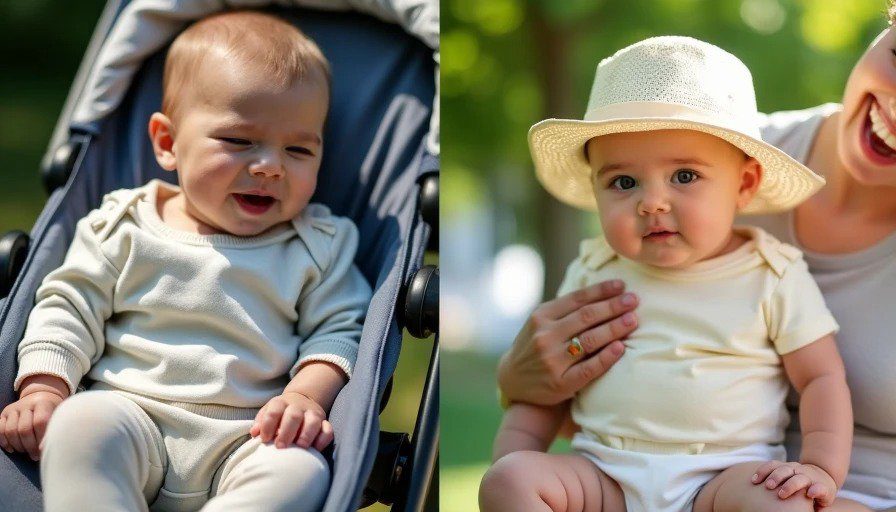
For babies under six months, direct sunscreen use is generally not recommended. The primary protection should be physical: lightweight long sleeves and long pants in breathable fabrics, a wide-brimmed sun hat that stays on, and true shade—not dappled light under a tree. For older babies, apply broad-spectrum sunscreen to any exposed skin, even on cloudy days and even in the shade.
The sun hat deserves special attention. It's only useful if it stays on. Look for hats with chin straps for younger babies and wide brims that shade the back of the neck. A hat sitting in the diaper bag protects no one.
Mistake 3: Choosing Style Over Breathability
Summer kidswear sections are full of tiny denim shorts, stiff cotton sundresses, and synthetic blends with cute prints. They look adorable on hangers. On a hot day, they trap heat and moisture against a baby's skin.
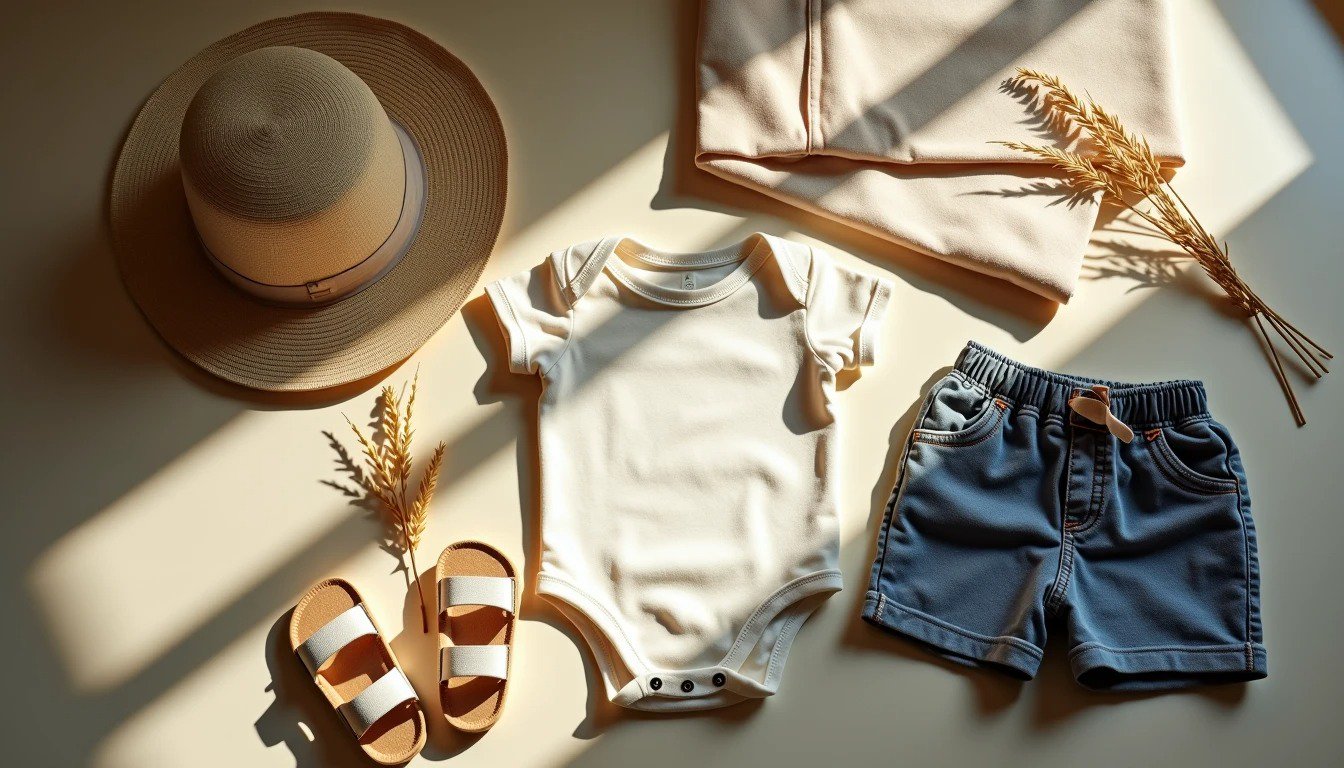
Fabric matters more in summer than in any other season. Lightweight, breathable natural fibers—cotton, bamboo, lightweight linen blends—allow air to circulate and moisture to evaporate. Synthetic fabrics like polyester and nylon, even in summer weights, tend to hold heat. A simple white cotton onesie will keep a baby cooler than a polyester sundress with ten times the visual appeal.
The same logic applies to accessories. A stretchy synthetic headband might complete an outfit in a photo, but it's also a band of non-breathable fabric wrapped around a baby's head on a hot day. Skip it.
Mistake 4: Neglecting the Air Conditioning Gap
Parents dress babies for the outdoor temperature and forget that the indoors is often a different climate entirely. A baby dressed perfectly for 30°C (86°F) outside will be freezing in a heavily air-conditioned restaurant, car, or shopping center.
The solution is a single lightweight layer that lives in the diaper bag. A soft cotton cardigan, a thin muslin blanket, or a lightweight knit wrap takes up almost no space and bridges the gap between outdoor heat and indoor chill. Put it on when you walk inside. Take it off when you leave. Simple.
Mistake 5: Skipping the Spare Outfit
Summer is messy. Sweat, spilled water, fruit juice, melted ice cream, sand, and sunscreen stains are daily occurrences. Yet parents who reliably pack spare clothes in winter somehow leave the house in summer with nothing but the outfit the baby is wearing.
Pack a full spare outfit—onesie, light pants or shorts, socks—in a sealed bag in the diaper bag. On a hot day, a fresh outfit can turn a fussy, sticky baby into a comfortable one in two minutes flat. It's the smallest preparation with the biggest payoff.
Mistake 6: Putting Babies in Shoes Too Early
Tiny sandals and miniature sneakers are hard to resist. But pre-walking babies don't need shoes. They need bare feet or, at most, soft socks or booties that don't constrict foot movement. Shoes on a non-walking baby serve no functional purpose and can interfere with the natural development of foot muscles and the sensory feedback babies get from their feet touching different surfaces.
Even for early walkers, barefoot time on safe, clean surfaces is valuable for balance and foot strength. When shoes are needed—for protection from hot pavement or rough terrain—choose lightweight, flexible-soled options with wide toe boxes. Leave the stiff-soled sandals on the store shelf.
A Simpler Summer Approach
Summer baby dressing can be genuinely simple. One comfortable, breathable onesie. A sun hat that stays on. A light layer in the bag for air conditioning. A spare outfit for the inevitable mess. Sun protection appropriate for the baby's age. That's the foundation. Everything else is optional.