The Real Difference Between Stylish Kidswear and Practical Kidswear
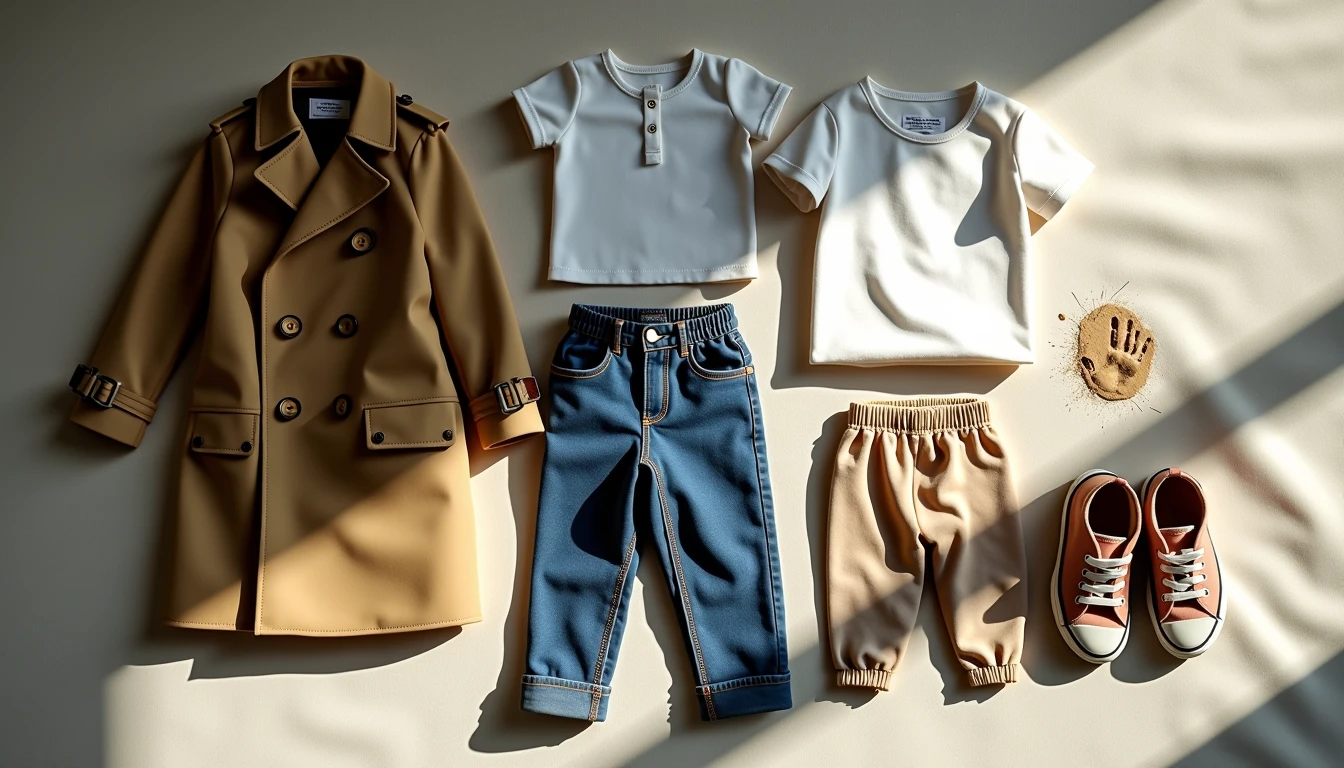
Kidswear feeds are full of mini trench coats and styled flat lays. But real children run, climb, spill, and squirm. The difference between stylish and practical kidswear isn't about choosing one—it's about knowing which question to ask first: "Does it look good?" or "Can my child actually live in this?"
Scroll through any kidswear feed and you'll see two very different worlds. In one, children pose in miniature trench coats, crisp button-downs, and carefully layered looks that could pass for adult fashion scaled down. In the other, a toddler in soft joggers and a faded T-shirt digs in the dirt, completely unaware of what they're wearing.
Neither world is wrong. But only one of them holds up on a Tuesday morning when a child is running late for preschool and refuses to wear anything with buttons.
The tension between stylish and practical kidswear isn't about choosing one over the other. It's about understanding what each term actually means—and being honest about which one serves real family life.
What "Stylish" Usually Means in Kidswear
In most kidswear coverage, "stylish" means aesthetically pleasing by adult standards. It's clothing that photographs well. It follows color trends, silhouette trends, and the same visual language that governs adult fashion. It looks intentional. It says something about the parent's taste.
There's nothing inherently wrong with that. Parents are allowed to enjoy how their children look. A thoughtfully chosen outfit for a family gathering or a holiday photo can bring genuine pleasure. The problem arises when "stylish" becomes the default lens for evaluating all kidswear—because a child's daily life has very little in common with a styled photoshoot.
A stylish romper with wooden buttons and a matching sun hat looks lovely on a rack. On a crawling baby, those buttons dig into the stomach. The sun hat gets yanked off within ninety seconds. The outfit that looked so good in the flat lay becomes a source of frustration for both parent and child.
This is the quiet flaw in most kidswear coverage: it evaluates clothes based on how they look in stillness, not how they function in motion. And children are rarely still.
What "Practical" Actually Means
Practical kidswear starts from a different place. It asks what a child needs to do while wearing the clothes—run, climb, nap, spill, squirm, be carried, use the bathroom independently, sit in a car seat, dig in the sandbox, and do it all again the next day after being washed.
A practical piece of clothing meets several tests:
Comfort against the skin: No scratchy tags, rough seams, or stiff fabrics that restrict movement. A child who is physically uncomfortable cannot tell you in words, but they will tell you in behavior—fussing, tugging, resisting getting dressed.
Easy on and off: Elastic waistbands, envelope necklines, snap closures in sensible places, and fastenings a young child can manage themselves. Every extra button or tricky zipper is a barrier between a child and their independence.
Washable and durable: The garment survives repeated washing without losing shape, softness, or color. If it requires special care, it doesn't belong in a young child's regular rotation.
Weather-appropriate and safe: Fabrics that breathe in heat, layers that trap warmth in cold, no long ties or loose embellishments that catch on playground equipment.
Freedom of movement: The child can squat, stretch, run, and hang upside down without clothing restricting them. If an outfit limits how a child plays, it's not practical—no matter how good it looks.
Where the Two Overlap
Here's the part that often gets lost in the conversation: stylish and practical are not opposites. The best kidswear is both.

A soft cotton dress in a beautiful color, worn over stretchy bike shorts, is stylish and practical. A well-cut sweatshirt in a muted tone, paired with elastic-waist joggers, looks put-together and handles everything a preschool day throws at it. Simple, well-made basics in coordinating colors are inherently attractive because they fit well and let the child move naturally.
The overlap happens when aesthetics serve function rather than fighting against it. Good design in kidswear means considering how a garment will be used, not just how it will be seen. A seam placed away from a pressure point. A neckline wide enough to pull over a wobbly toddler head. A fabric soft enough for a baby who spends most of the day lying down. These are design decisions, and the best kidswear brands treat them as seriously as any fashion house treats a silhouette.
How to Shift the Lens
For parents who want to dress their children in clothes that look good and work well, the shift is simple: start with the practical question, then find the version that also looks pleasing.
Ask first: Can my child move freely in this? Will it survive the wash? Can they get it on and off? Is the fabric comfortable against their skin for hours?
If the answer to all four is yes, then ask: Does this come in colors or patterns I enjoy? Does it pair easily with other pieces we own? Does the overall look feel like us?
Starting with practical requirements and treating aesthetics as the secondary filter produces a wardrobe that serves the child first and the parent's taste second. That's the right order.
The Quiet Goal
The real difference between stylish and practical kidswear isn't about abandoning one for the other. It's about knowing which one gets priority in daily life. A child who is comfortable, free to move, and not fighting their clothes is already well-dressed. Any style that builds on that foundation is welcome. Any style that compromises it is not.
The most successful outfit for a young child is the one they forget they're wearing five minutes after putting it on. That's not a failure of style. That's the whole point.