Back-to-School Outfits That Can Survive the Whole Week
Back-to-school outfits need to survive paint, snacks, playgrounds, and multiple washes—not just look good on the first day. Five simple, comfortable outfit formulas built for real classroom life can carry a child through the whole week without a single clothing-related meltdown.
Back-to-school shopping comes with a lot of noise. Retailers push full wardrobe overhauls. Social feeds fill with first-day outfit photos. Parents feel the pressure to send their child back looking polished, prepared, and put-together.
But here's what a school outfit actually needs to do: survive paint, snack time, playground sweat, lunch spills, and at least one round of sitting cross-legged on a rug. Then get washed and do it all again the next day. The outfits that hold up through a full school week aren't the ones that look best in a flat lay. They're the ones built for real classroom life.
The Five-Outfit School Week Formula
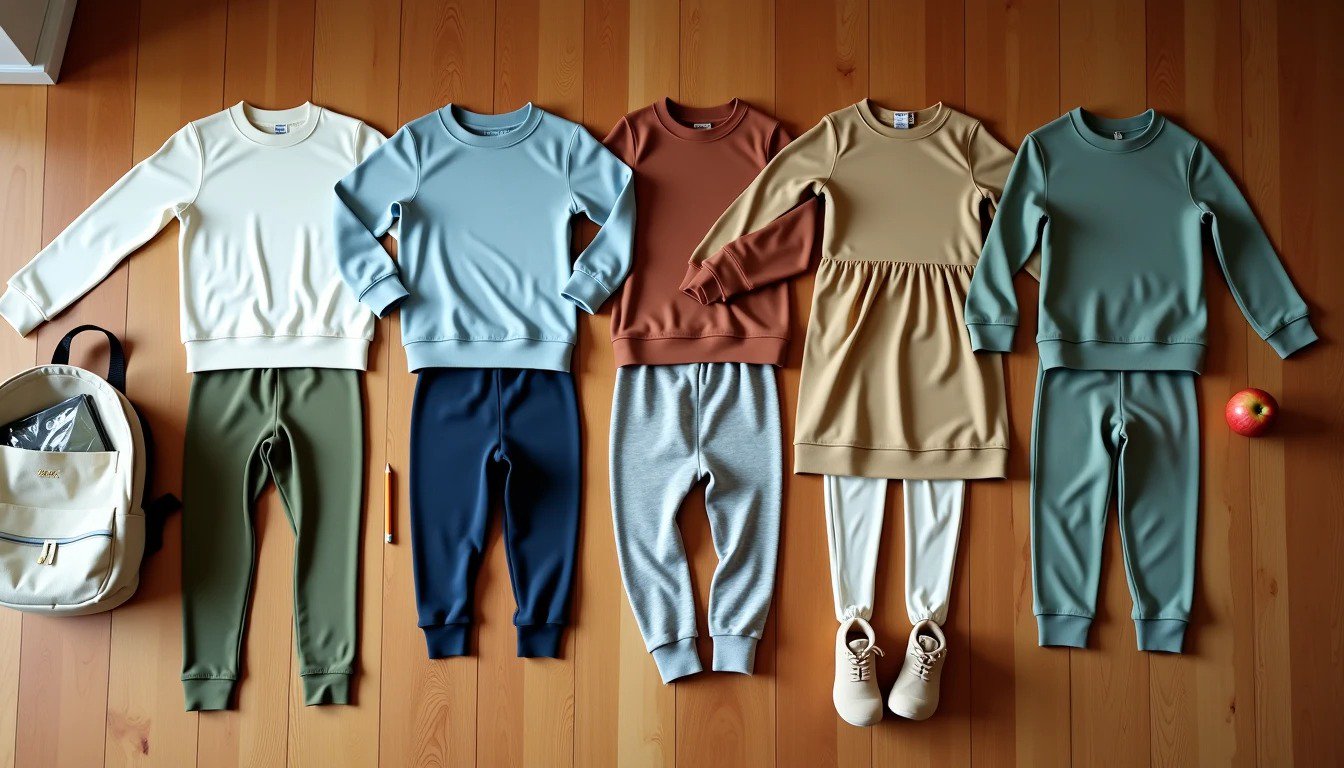
Most preschool and early elementary children need five complete outfits for a standard school week—one per day. These don't need to be five entirely different looks. In fact, the best school wardrobes are built on repetition with small variations, not constant novelty.
Start with a base palette of comfortable, mix-and-match pieces in colors that work together. If most tops can pair with most bottoms, the five outfits assemble themselves. Add one backup outfit that lives in the school bag or cubby for spills, accidents, or unexpected weather shifts. That's six outfits total in the school rotation.
Outfit 1: Soft Tee + Elastic-Waist Pants
This is the default school outfit for good reason. A short-sleeve or long-sleeve cotton tee paired with elastic-waist joggers or soft pants covers every activity a school day can throw at a child: sitting on the rug, climbing on the playground, painting at the easel, eating lunch. The waistband handles bathroom independence. The soft fabrics don't distract from learning. Choose a tee in a solid color or a simple print, and pants in a neutral that pairs with everything.
Outfit 2: Long-Sleeve Top + Pull-On Shorts or Skirt with Bike Shorts
For warmer early-fall days when mornings are cool but afternoons heat up, a lightweight long-sleeve top paired with pull-on shorts strikes the right balance. If your child prefers a skirt or dress, add stretchy bike shorts underneath. The shorts provide coverage during active play and eliminate any self-consciousness about sitting, climbing, or hanging upside down on monkey bars. This outfit transitions easily from classroom to playground without a wardrobe change.
Outfit 3: Sweatshirt + Soft Pants
Midweek, when everyone is a little tired and comfort matters most, a cozy sweatshirt and soft pants combination is the answer. Choose a sweatshirt that layers easily over a T-shirt—if the classroom warms up, the outer layer comes off and the outfit still works. Half-zip or relaxed crew neck styles are easier for young children to manage independently than pullover hoodies with tight neck openings. Soft pants with an elastic waist keep the whole outfit comfortable from morning circle time to afternoon pickup.
Outfit 4: Simple Dress or Tunic + Leggings
A soft cotton dress or tunic worn over leggings offers one-piece ease with full mobility. The leggings make the outfit playground-ready and keep legs covered during cooler mornings. Stick to jersey or French terry fabrics that can handle washing and don't require ironing. Avoid anything with complicated buttons, ties at the back, or embellishments that catch on playground equipment. The child should be able to take this outfit off and put it on without help for bathroom breaks.
Outfit 5: A Slightly Nicer Casual Set
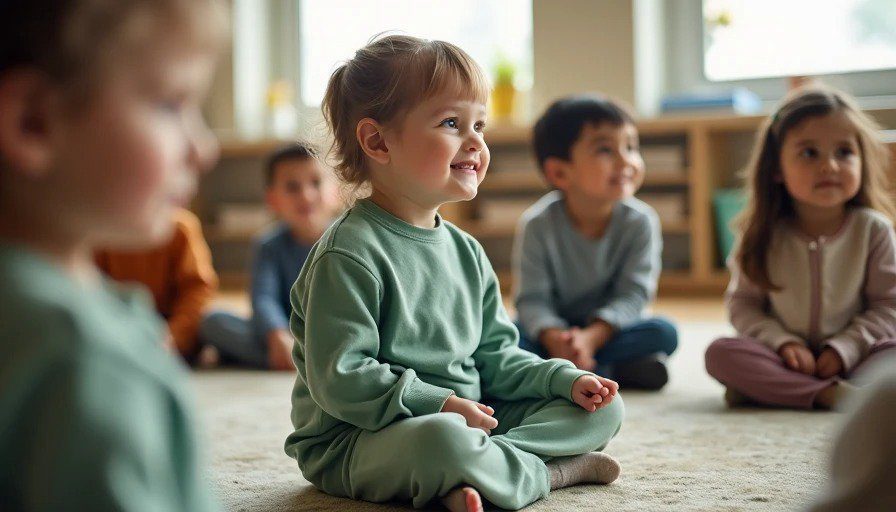
Friday often brings something a little different—a school assembly, a special activity, or simply the end-of-week energy. A casual matching set in soft fabric—like a coordinated sweatshirt and jogger set, or a soft knit top with neat pull-on pants—feels slightly more intentional without crossing into formal territory. It's still comfortable, still washable, still playground-ready. But it sends a quiet signal that the week ended well.
What to Keep in the School Bag
Every school bag or classroom cubby needs one complete spare outfit, sealed in a bag that keeps it clean and dry. This spare isn't part of the five-outfit rotation. It lives in the background, ready for the day when paint spills down a shirt or a puddle on the playground catches everyone by surprise.
The spare outfit should follow the same principles as the daily rotation: soft fabrics, elastic waistbands, nothing precious. Rotate the spare into the weekly laundry and refresh it so it's always seasonally appropriate and always the right size.
What to Skip for School
Leave the following at home: stiff denim that restricts movement, belts and complicated fastenings that slow down bathroom breaks, white clothing that shows every stain by snack time, and anything that requires special washing instructions. School clothes are work clothes for children. They should be able to do their job without the child—or the parent—worrying about them.
The Back-to-School Wardrobe Mindset
Back-to-school clothing shouldn't be a source of stress. A child who is comfortable, able to move freely, and not distracted by scratchy seams or stiff waistbands is a child who can focus on what actually matters at school: learning, playing, making friends, and coming home happily tired. The outfits that survive the week are the ones that make themselves invisible. And that's exactly the point