How to Dress Kids for Rainy Days Without Overcomplicating It
Dressing kids for rain doesn't require an expedition plan. A waterproof jacket, a pair of boots, and a dry change of clothes in the bag cover nearly every rainy scenario. Skip the umbrella, skip the heavy layers—here's what actually works when the forecast says wet.
Rainy days have a way of making kidswear feel suddenly complicated. Parents stare at the weather forecast, then at the wardrobe, and start layering up as if preparing for an expedition. By the time the child is dressed, they're wrapped in so many layers they can barely lower their arms.
But rain isn't an emergency. It's just water. And dressing a child for it doesn't require a three-part system or a gear closet full of specialty items. A few well-chosen pieces, applied with common sense, cover almost every rainy scenario a family will actually encounter.
The Only Three Things That Matter
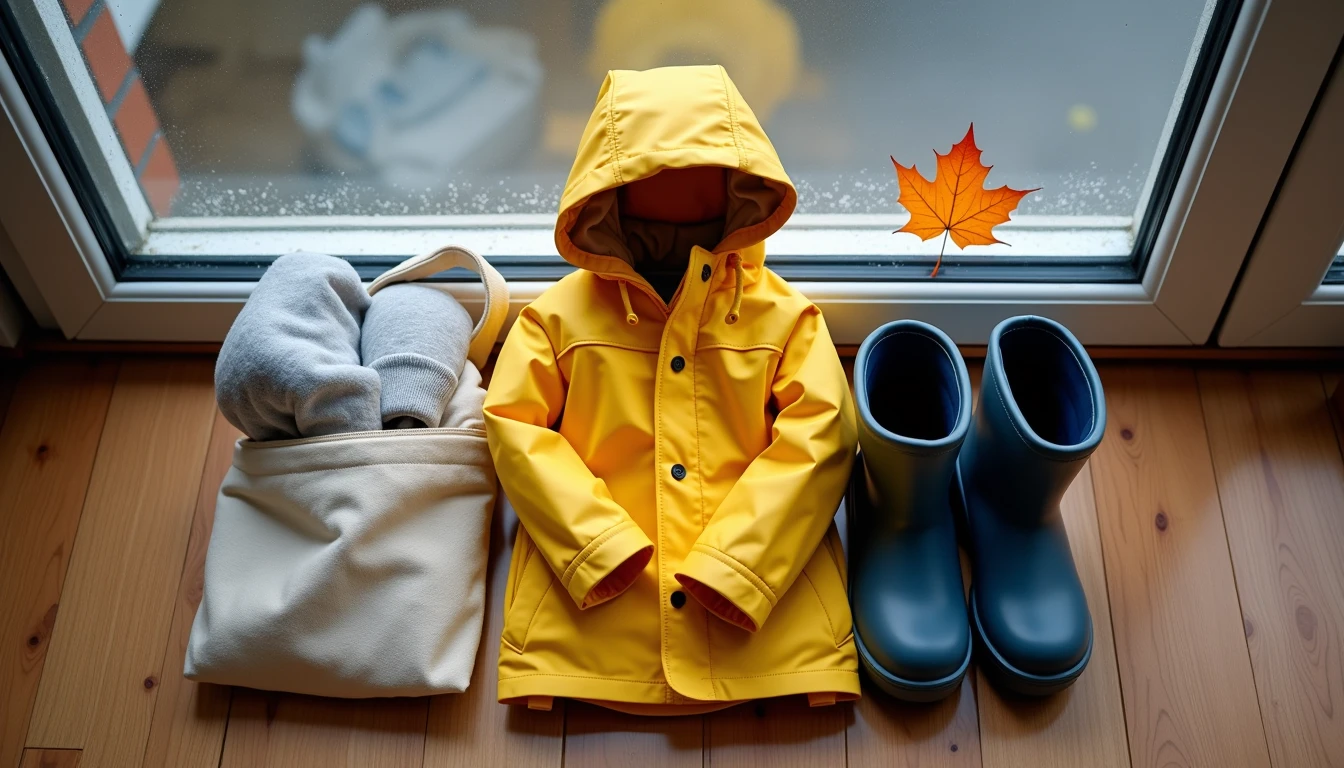
Forget the elaborate layering charts. A child heading out on a rainy day needs exactly three functional pieces, plus their regular clothes underneath.
A waterproof outer layer, not a water-resistant one. There's a meaningful difference. Water-resistant fabric repels light mist and drizzles for a short time. Waterproof fabric keeps water out even in steady rain. For a child who will be outside for more than five minutes—walking to school, playing at the park, splashing in puddles—waterproof is the standard. Look for taped seams and a hood that actually stays up. A jacket that soaks through in twenty minutes isn't saving anyone money.
Rain boots or waterproof shoes. Canvas sneakers in the rain are a losing proposition. Within minutes, they're soaked, and a child walking in wet socks is a child who will be uncomfortable for the rest of the outing. Proper rain boots keep feet dry, but they should be lightweight—heavy rubber boots tire small legs quickly. For older toddlers and preschoolers who walk longer distances, look for boots with flexible soles and a bit of cushioning inside. If the day involves mostly car rides and short walks between buildings, waterproof sneakers or treated leather boots work fine.
A change of clothes in the bag. This is not optional. Even the best rain gear has its limits. A child who finds the one deep puddle or slides off a wet bench needs dry clothes waiting in the car or day bag. Pack a full outfit—top, bottom, socks, and underwear—in a sealed plastic bag or wet bag. The peace of mind is worth the small amount of space it takes up.
What Goes Underneath
Once the outer layer is handled, the clothes underneath should be the same everyday pieces a child normally wears. There's no need for thermal layers or special base garments unless the temperature is genuinely cold. A soft cotton tee and comfortable pants or leggings are enough for a mild rainy day. If the air is cool, add one thin long-sleeve layer—nothing more.
The mistake parents often make is overdressing for rain. A child zipped into a waterproof jacket over a heavy sweatshirt will overheat within minutes of active play. Rain doesn't automatically mean cold. It means wet. Dress for the temperature, then add the waterproof layer on top.
The Puddle Question
Every child wants to jump in puddles. Parents have two reasonable choices: dress for it, or set a boundary.
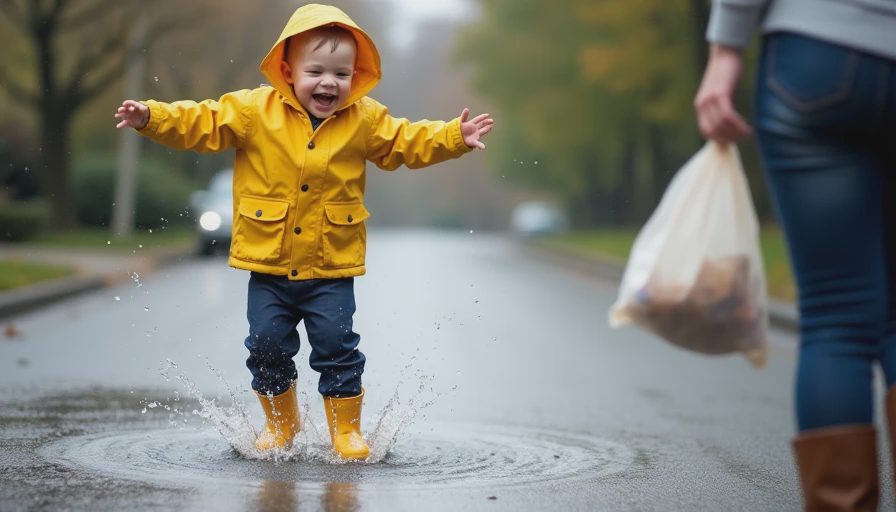
If puddle-jumping is on the agenda, rain boots and waterproof pants or a full rainsuit are the move. Waterproof pants that pull on over regular leggings or joggers keep the child dry from waist to ankle and take thirty seconds to put on. For toddlers who treat every puddle as a personal invitation, a one-piece rainsuit is even simpler—it covers everything, goes on in one step, and eliminates the gap between jacket and pants where water sneaks in.
If the plan is to stay mostly dry with maybe a little splashing, rain boots and a waterproof jacket are sufficient. Accept that the bottoms might get damp around the edges and move on. A little moisture never hurt anyone.
What You Don't Need
Leave the umbrella at home. Young children can't manage them reliably, and a poked eye or a dropped umbrella in a windy parking lot creates more problems than rain ever did. Hoods on jackets are more practical—they leave both hands free and can't be left behind at the playground.
Skip the elaborate layering. A base layer plus a mid-layer plus a rain shell is overkill for anything short of an all-day hike in cold mountain rain. For everyday urban and suburban outings—school runs, park visits, errands—regular clothes under a waterproof jacket is enough.
Three Real-Life Rainy Day Outfits
Light drizzle, quick errands: Soft cotton tee, joggers or leggings, lightweight waterproof jacket, rain boots. Spare socks in the bag.
Steady rain, outdoor play: Cotton tee, comfortable pants, waterproof jacket with hood, waterproof pull-on pants, rain boots. Full change of clothes in a wet bag.
Cold rain, longer outing: Long-sleeve cotton tee, lightweight fleece or sweatshirt, waterproof jacket, waterproof pants, rain boots, thin hat that fits under the hood. Dry clothes waiting in the car.
The Bigger Principle
Rainy day dressing isn't about buying more gear. It's about having one good waterproof layer, a pair of boots that fit, and a dry backup. Everything else is the same clothing a child wears on any other day. Keep it simple. Rain is just weather, and children are more waterproof than parents think.