Cotton vs Bamboo vs Blends: Which Fabrics Actually Matter for Kids?
Kidswear tags are full of fabric claims—super-soft cotton, eco-bamboo, performance blends. But which fabrics actually matter for a child's comfort, and which are just marketing? A clear, practical guide to cotton, bamboo, blends, and what parents really need to know before buying.
Walk through any kidswear section and the fabric labels read like a marketing glossary. Super-soft cotton. Eco-friendly bamboo. Performance blends. Moisture-wicking. Temperature-regulating. Every tag promises something special. For parents just trying to find a comfortable onesie or a pair of pajamas that won't irritate their child's skin, the terminology is more confusing than helpful.
The truth is simpler than the marketing suggests. A handful of fabrics do most of the work in a child's wardrobe, and understanding the real differences between them—not the advertising claims—makes shopping decisions clearer and cheaper.
Cotton: The Workhorse That Still Leads
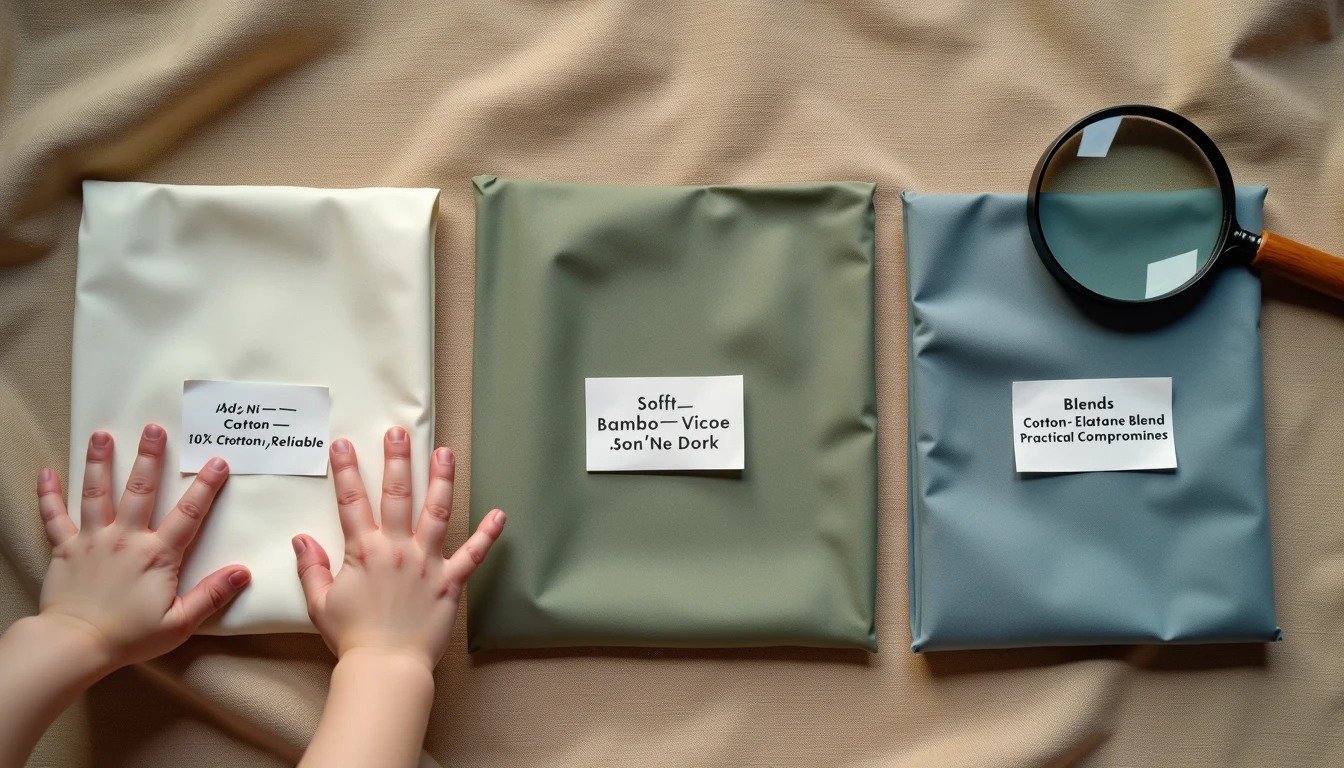
Cotton is the default kidswear fabric for good reason. It's soft, breathable, absorbent, and gets softer with washing. It allows air to circulate against the skin, which helps regulate body temperature in both warm and cool weather. For everyday clothing—T-shirts, bodysuits, leggings, pajamas—cotton remains the most reliable choice.
Not all cotton is equal. Standard cotton can be rough if it's made from shorter fibers. Long-staple cotton, sometimes labeled as Pima or Supima, uses longer fibers that produce a smoother, more durable fabric less prone to pilling. Organic cotton is grown without synthetic pesticides or fertilizers. The "organic" label speaks to how the cotton was farmed, not necessarily to how the fabric feels. Some organic cotton is incredibly soft. Some is fairly basic. The certification matters for environmental and health reasons, but it's not a guarantee of quality feel.
For parents, the practical takeaway is this: cotton works for almost everything. If you're unsure about a fabric choice, cotton is the safe and sensible default. Look for descriptors like "brushed" or "long-staple" if you want extra softness. Don't pay a premium for organic unless the farming practices matter to you personally.
Bamboo: Soft, But Know What You're Buying
Bamboo fabric has surged in popularity, especially in baby clothing and pajamas. The appeal is real: bamboo-derived fabrics are often exceptionally soft, with a silky feel that parents love for items worn against delicate skin. They drape well and have natural temperature-regulating properties that can help keep a child cool in summer and warm in winter.
The important distinction—and it's one most marketing glosses over—is that "bamboo fabric" is almost never bamboo in its natural state. The vast majority is bamboo viscose or rayon, produced by chemically processing bamboo pulp into fiber. The process transforms the raw material so completely that the resulting fabric shares few of the environmental benefits of the bamboo plant itself.
This doesn't mean bamboo viscose is a bad fabric for children. It's soft, breathable, and comfortable. But it often requires more careful laundering than cotton—it can pill more easily and lose shape if washed or dried too aggressively. And the eco-friendly marketing surrounding bamboo should be viewed with a healthy skepticism. The fabric feels nice. Whether it's genuinely better for the planet depends on the specific manufacturing process, not the word "bamboo" on the tag.
For parents: bamboo viscose is a legitimate choice for softness and comfort, particularly in pajamas and items worn against sensitive skin. Just don't pay a significant premium based on environmental claims alone.
Blends: Practical Compromises Worth Understanding
Cotton-polyester blends, cotton-elastane blends, and other fiber combinations exist to solve specific problems. They're not inherently better or worse than pure fabrics. They're tools for particular jobs.
A small percentage of elastane or spandex added to cotton creates stretch, which is genuinely useful in bodysuits, leggings, and fitted pajamas. It helps the garment hold its shape and makes dressing a squirming child easier. Five percent elastane is a practical addition. Fifteen percent is a garment that may feel more like activewear than everyday clothing—fine for some uses, unnecessary for most.
Cotton-polyester blends typically aim for durability and wrinkle resistance. Polyester adds strength and helps the garment dry faster. The trade-off is breathability. Polyester doesn't breathe as well as cotton, which means a 50/50 cotton-poly blend T-shirt will feel warmer and trap more moisture than a 100% cotton equivalent. For a child who runs hot or sweats easily, higher polyester content can mean more discomfort.
For parents: check the percentage. A 95/5 cotton-elastane blend preserves the feel of cotton with a useful touch of stretch. A 60/40 cotton-polyester blend is a different garment entirely—more durable, less breathable. Know which trade-off you're making.
Modal and Lyocell: The Middle Ground
Modal and lyocell are semi-synthetic fibers made from wood pulp, often from beech or eucalyptus trees. They sit in a category between cotton and bamboo viscose. Modal is known for being exceptionally soft and holding dye well. Lyocell, often branded as TENCEL, is produced through a more environmentally conscious closed-loop process that recovers and reuses solvents.
Both fibers are soft, breathable, and comfortable against the skin. They're often blended with cotton to add softness and drape. For children's clothing, modal-cotton blends are particularly common in pajamas and under-layers where comfort against the skin is the priority.
The downside is durability. Modal and lyocell can pill more than cotton and may require gentler washing. For everyday play clothes that face heavy wear, pure cotton or a cotton-rich blend is usually more practical. For sleepwear and against-the-skin pieces, modal blends are worth considering.
What to Ignore
Most of the technical performance claims on kidswear tags can be safely ignored. "Moisture-wicking" on a toddler's T-shirt is solving a problem a toddler doesn't have. "Antimicrobial" usually refers to a chemical treatment that washes out over time. "Temperature-regulating" on a bamboo blend is describing a property common to many natural and semi-synthetic fibers, not a unique innovation.
Parents don't need to become textile experts. They need to know three things: what feels soft against the skin, what breathes, and what survives the laundry. Most of the rest is marketing.
The Simple Fabric Guide for Parents
Everyday play clothes: 100% cotton or 95/5 cotton-elastane. Soft, breathable, washable.
Pajamas and sleepwear: Cotton, bamboo viscose, or cotton-modal blends. Prioritize softness and breathability.
Active summer days: Lightweight cotton. Avoid polyester-heavy blends that trap heat.
Layering pieces: Cotton or cotton-rich blends with a small amount of elastane for ease of movement.
Special occasion pieces: Any comfortable fabric that looks good. The occasion is short. Comfort still matters.
The fabric that matters most is the one your child is comfortable wearing all day, that you can wash without anxiety, and that doesn't require a glossary to understand. Cotton does all three. Everything else is worth knowing—but cotton is where to start.