Family Photo Outfits for Young Kids That Still Feel Comfortable
Family photos don't have to mean forcing young children into stiff, uncomfortable outfits they'll tug at the whole session. The best looks start with what kids already find comfortable—then build from there. Five outfit formulas that coordinate beautifully and let children relax into being themselves.
Family photos live in a strange tension. Parents want everyone to look coordinated and polished. Young children want to run, sit on the grass, and definitely not wear the stiff collared shirt someone picked out for them. The result is often a standoff: parents negotiating with a toddler who's already tugging at their outfit before the photographer has even set up.
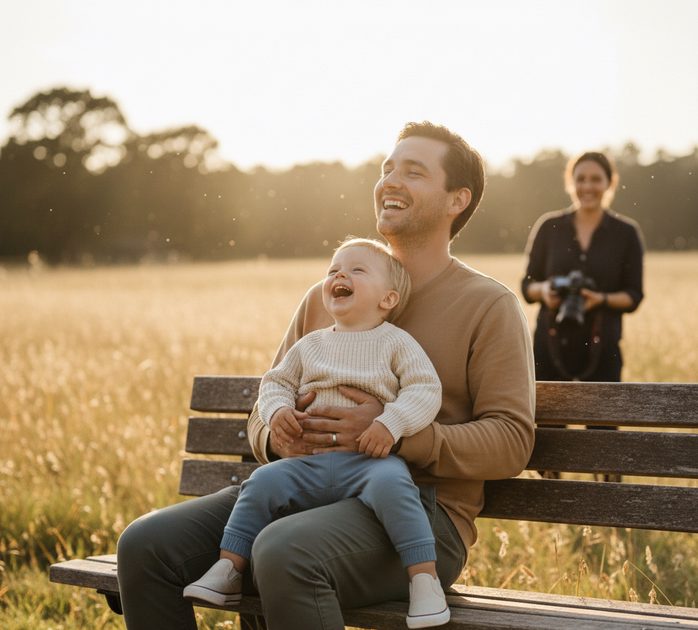
It doesn't have to go that way. The best family photo outfits for young children are the ones they forget they're wearing. When a child is comfortable, they relax. When they relax, the photos look better—not because the outfits are perfect, but because the child looks like themselves.
Start With Comfort, Then Build the Look
The most common mistake parents make is choosing photo outfits based on how they'll photograph and only then asking whether the child will tolerate wearing them. The order should be reversed. Start with fabrics and fits the child already finds comfortable, then find versions of those pieces in colors and styles that work for the photo.
If your child lives in soft cotton tees and elastic-waist joggers, don't put them in a stiff button-down and rigid trousers for the photo. Look for a soft knit top in a solid color, a comfortable pull-on pant in a neutral tone, or a cotton dress that feels like a T-shirt. The child's comfort baseline is your starting point. The photo-ready version is a small step from there—not a leap into entirely unfamiliar clothing.
Coordinate, Don't Match
Matching outfits—everyone in identical white shirts and khaki pants—have mostly fallen out of favor, and for good reason. They can look forced, and they put pressure on each family member to fit a single template.
Coordination is more forgiving and more natural. Choose a palette of two or three colors that work together, then let each family member wear pieces in that range. For young children, soft neutrals and muted tones photograph beautifully without competing with faces. Cream, oatmeal, dusty blue, soft rust, sage green, and warm sand all read as gentle and timeless. Avoid loud prints, logos, and characters that draw the eye away from expressions.
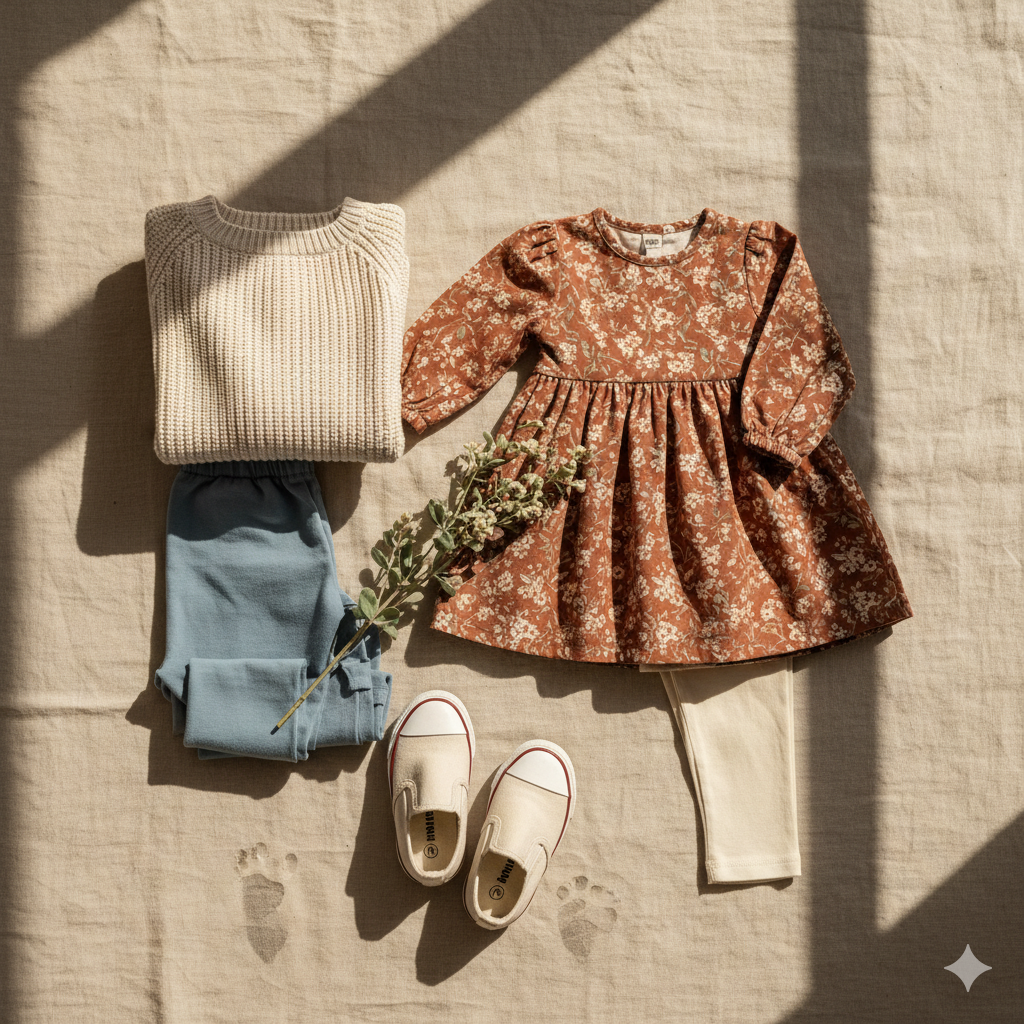
A simple approach: pick one base color, one accent color, and one neutral. For example, cream as the base, dusty blue as the accent, and warm sand as the neutral. One child might wear a cream sweater with dusty blue pants. Another might wear a dusty blue dress with cream leggings. The palette ties everyone together without anyone looking like they're in uniform.
Outfit Formulas That Work for Young Kids
These five formulas are built around what young children actually find comfortable. Each one can be adapted to different color palettes and seasons.
Formula 1: Soft Knit Sweater + Elastic-Waist Pants
A lightweight knit sweater in a solid color, paired with soft pull-on pants or joggers in a coordinating neutral. The sweater looks more finished than a T-shirt but feels just as comfortable. The elastic waist means no last-minute safety pins or belt adjustments. Works for boys and girls equally well.
Formula 2: Cotton Dress + Bike Shorts or Leggings
A soft cotton dress in a solid color or subtle pattern, worn over stretchy bike shorts or lightweight leggings. The shorts provide coverage during active play between shots and let the child sit, squat, and move freely without worrying about how the dress falls. Choose a dress with a relaxed cut—nothing fitted or restrictive.
Formula 3: Long-Sleeve Polo or Henley + Soft Trousers
For a slightly more polished look that doesn't sacrifice comfort, a soft cotton polo or a henley with minimal buttons paired with elastic-waist trousers or chinos in a soft, brushed fabric. The key word is "soft"—stiff collars and rigid waistbands undo the whole formula. Look for polos in cotton jersey rather than stiff piqué.
Formula 4: Coordinated Sweatshirt + Jogger Set
A matching sweatshirt and jogger set in a muted tone can look intentional and modern in photos while being the most comfortable option in the rotation. This works particularly well for toddlers and babies who will be held, carried, or sitting on laps for much of the session. Choose a set without logos or graphics.
Formula 5: Simple Romper or Overalls for Babies
For babies who aren't yet walking, a soft cotton romper or a pair of lightweight overalls over a plain onesie keeps things simple. Avoid elaborate headbands, bow ties, or accessories that the baby will pull off within the first three minutes. A clean, simple outfit lets the baby's expressions be the focus.
What to Avoid
Leave the following at home: stiff denim, rigid collars, scratchy embellishments, anything with itchy tulle or sequins, shoes the child has never worn before, and belts. If an outfit requires constant adjustment, it will show in the photos—and in the child's face.
New shoes are a particular risk. A child in unfamiliar footwear will be thinking about their feet instead of relaxing into the moment. Choose shoes they've worn before and can move in easily. Soft leather boots, clean canvas sneakers, or simple sandals that stay on during movement are all fine. Bare feet are also a lovely choice for outdoor sessions, especially for babies and toddlers.
The Day-Of Checklist
A few practical steps make the photo session smoother. Bring a full spare outfit for each young child—spills happen, and a clean backup removes the pressure. Pack snacks that don't stain and water in a spill-proof cup. Arrive with clothes on hangers and dress children at the location if possible, especially if there's a car ride involved. A child who sits in a car seat for twenty minutes in their photo outfit is a child whose clothes will show it.
Most importantly, let go of the idea that everything needs to be perfect. The best family photos capture a family as they actually are—connected, warm, and comfortable with each other. Outfits support that goal. They don't define it.